
Table of Content
- Key Takeaways
- Step 1: Understand What You Actually Need
- Step 2: Know the Main Types of Digital Marketing Agencies
- Step 3: Understand Digital Marketing Agency Costs (2026)
- Step 4: Evaluate Their Strategy (Not Their Promises)
- Step 5: Check Proof, Not Just Testimonials
- Step 6: Ask the Right Questions Before Hiring
- Step 7: Transparency in Reporting & Communication
- Step 8: Contracts & Commitment
- FAQs | Choosing a Digital Marketing Agency
- Final Thoughts
Introductions
The right digital marketing agency for business is the one that asks about your goals before talking about their services. If an agency jumps straight to a proposal without understanding your business model, customer type, and budget, that’s a red flag.
Most small businesses waste 3 to 6 months on the wrong agency before switching. This guide helps you avoid that.
Most business owners come to an agency search after a bad experience. They paid someone, waited 4 months, got a report full of numbers that didn’t translate to a single extra customer, and are now understandably skeptical. That’s the reality of the industry in 2026.
The problem isn’t that digital marketing doesn’t work. It’s that most businesses hire based on the wrong signals: price, a fancy website, a confident pitch, rather than the things that actually predict results.
This guide walks you through exactly what to look for, what to avoid, and how to make a decision you won’t regret 6 months later.
Step 1: Get Clear on What You Actually Need Before You Talk to Anyone
This sounds obvious. Most people skip it anyway.
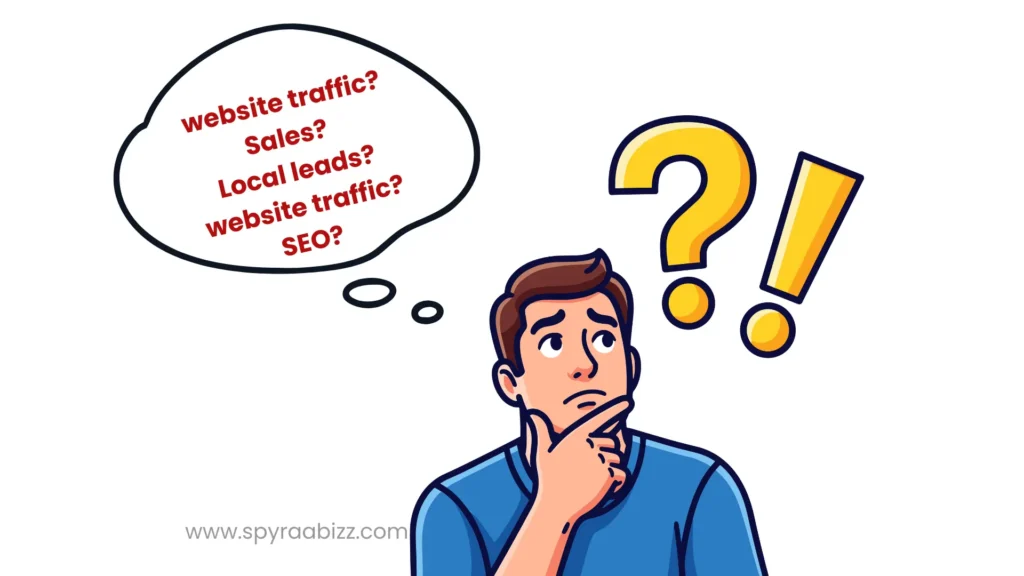
Before you call an agency, answer these three questions for yourself. What result do you need in the next 90 days? Not ‘more visibility’ or ‘a better online presence.’ A specific, measurable outcome: 15 leads per month, 500 more website visitors, 20 new Google reviews, page 1 ranking for two keywords.
Second: what is your monthly budget? Not a range. A number. If you tell an agency ‘between Rs 10,000 and Rs 50,000,’ you’ve already told them to quote Rs 50,000.
Third: what have you already tried? If you ran Google Ads for 3 months and got nothing, the problem might be landing page quality, not the ads themselves. A good agency will ask this. A bad one won’t.
Your answers to these three questions determine which type of agency you need. And they’re the first filter for eliminating agencies that aren’t a fit.
Matching your goal to the right agency type
If you need leads this month, you need a PPC-focused agency or a specialist who runs Google Ads campaigns for your specific industry. SEO won’t help in 90 days.
If you want to rank on Google in 6 months and build long-term organic traffic, you need an SEO-first agency with real content capabilities, not just backlink building.
If you’re a local service business like a clinic, salon, or coaching institute, Google Business Profile optimization is often the single highest-ROI starting point. Many agencies don’t lead with this because it’s simpler and cheaper than what they want to sell you.
If you’re an early-stage business with no website and no online presence, you need someone who can do the basics right first: website, GBP, and local SEO. Full-service packages with 6 services bundled together rarely make sense at this stage.
Step 2: Understand What Types of Agencies Exist
Not every agency is the same. And the wrong type for your situation will cost you money and time regardless of how good they are at what they do.
Freelancers and independent consultants
A freelancer is typically one person with deep expertise in one or two specific areas: SEO, Google Ads, social media content, or web development. They’re the right choice when you need a specific skill done well at a contained cost. They’re the wrong choice when you need strategy, coordination across multiple channels, or someone who can manage a growing workload month over month.
Pricing typically runs between Rs 8,000 and Rs 25,000 per month for a single service. The quality varies enormously. Some freelancers are better than agencies. Some are beginners who figured out that ‘digital marketer’ sounds like a job you can charge for.
Specialized agencies
A specialized agency focuses on one core service: SEO only, Google Ads only, social media only. The advantage is depth. An agency that does nothing but SEO has processes, tools, and experience that a generalist can’t match. The disadvantage is that they can’t always see how their work connects to your other marketing channels.
This is usually the right choice for businesses that have a clear single problem: ‘We rank on page 3 for our main keyword’ or ‘Our Google Ads are running but not converting.’ Specialized agencies are also easier to evaluate because their work is more measurable.
Full-service agencies
A full-service agency handles multiple channels: SEO, paid ads, social media, content, website, sometimes email and PR. The appeal is having one team coordinate everything. The risk is that ‘full-service’ often means average quality across many services rather than deep expertise in any one.
Full-service makes sense for growing businesses that have budget for multiple channels and need strategic coordination between them. It rarely makes sense for a business under Rs 30,000 per month in marketing spend. At that budget, you’re better off with one thing done well than six things done poorly.
Step 3: Understand What Things Actually Cost in 2026
Agency pricing in India varies wildly and most published pricing is misleading. Here’s what the market actually looks like for small and medium businesses.
SEO services
Basic local SEO in a mid-size Indian city like Pune runs between Rs 8,000 and Rs 20,000 per month. This typically covers on-page optimization, Google Business Profile management, monthly reporting, and some content work. Anything below Rs 8,000 per month for real SEO is almost certainly using shortcuts that will cause problems later.
Competitive SEO for markets with serious competition, healthcare, education, real estate in major cities, starts around Rs 25,000 per month and goes up based on the number of keywords, content volume, and link building required.
Google Ads and Meta Ads management
Most agencies charge a management fee on top of your ad spend. In India, management fees for small accounts typically run between Rs 5,000 and Rs 15,000 per month, or 10 to 20 percent of your monthly ad spend, whichever is higher. A monthly ad budget of Rs 15,000 to Rs 30,000 is the minimum where Google Ads starts generating enough data to optimize properly.
Website design and development
A basic 5 to 8 page WordPress site runs Rs 15,000 to Rs 40,000 depending on design complexity and custom functionality. An e-commerce site with WooCommerce starts around Rs 35,000 and goes up based on number of products and integrations. Anything below Rs 12,000 for a business website is either a template with minimal customization or work done by someone learning on your project.
What the pricing tells you
Price alone tells you very little. A Rs 5,000 per month SEO package from a reputable specialist can outperform a Rs 30,000 package from an agency with a nice office and a big team. The question is never ‘is this expensive or cheap?’ It’s ‘what specifically are they going to do, how will we know it’s working, and what does success look like in 90 days?
Step 4: Evaluate Their Strategy, Not Their Pitch
The sales call will almost always sound good. That’s what sales calls are designed to do. The question is what happens after you pay.
A real digital marketing agency for small business should be able to explain exactly what they’ll do in month 1, what they’ll measure, what they’ll do differently in month 2 based on that data, and what realistic results look like in 3 months and 6 months. If the plan is vague at this stage, it will be vague when you’re actually a client.
Questions that reveal a real strategy
Ask them: ‘What would you do differently for my business compared to a client in a different industry?’ A good agency will immediately start asking questions: what’s your average customer value, who is your main competitor, what does your sales process look like after a lead comes in. A bad agency will pivot to showing you a case study from a different industry.
Ask them: ‘What metrics will we track and how often will I see them?’ If they can’t name 3 specific KPIs relevant to your goal without pausing, they don’t have a real measurement process.
Ask them: ‘What’s the most common reason your campaigns don’t work?’ A confident, experienced agency will have a real answer. Something like: ‘Usually it’s that the website landing page can’t convert the traffic we send, or the business can’t respond to leads fast enough.’ A bad agency will tell you their campaigns always work.
What to ignore
Ignore the awards. Most digital marketing awards are either self-nominated or purchased. Ignore the size of the team unless your account specifically requires multiple specialists working simultaneously. Ignore case studies that show only percentages without baseline numbers. ‘300% traffic increase’ means nothing if baseline traffic was 50 visitors per month.
Step 5: Red Flags That Should End the Conversation
This is the section most blogs skip. These are the specific things that should make you walk away.
They guarantee rankings
No agency can guarantee a specific Google ranking. Google’s algorithm has hundreds of variables and updates constantly. Any agency that says ‘we guarantee page 1 in 3 months’ is either lying or planning to use black-hat tactics that will hurt your site long-term. Page 1 for which keyword? In which location? Against which competitors? The claim is meaningless and the guarantee is worthless.
They can’t explain what they’ll do in plain language
If you ask ‘what exactly will you do for my website’s SEO?’ and the answer is a list of jargon without any plain-language explanation, that’s a problem. Good practitioners can explain complex things simply. Bad ones use complexity to hide the fact that they don’t have a real plan.
They only show testimonials, not actual results
‘Great agency, highly recommend’ tells you nothing. Ask for a case study with a specific business type, a specific starting point, and specific results with a timeframe. If they can’t produce one for a business similar to yours, ask why. The answer is revealing.
They push a long-term contract upfront
A 12-month contract before they’ve delivered a single result is protecting them, not you. Most reputable agencies work on monthly retainers with a 30 to 60 day notice period. Some ask for a 3-month minimum to give strategies time to work, which is reasonable. A 12-month lock-in from someone you’ve never worked with before is not.
They don’t ask about your customer or your sales process
An agency that doesn’t understand who your customer is, what they search for, and what happens after a lead comes in cannot build a strategy that works for your business. If the first call is all about their capabilities and none about your customer, that’s exactly how the campaign will be run.
They outsource everything
Ask directly: ‘Who on your team will work on my account? Is any of this work outsourced?’ Some agencies are essentially resellers who take your money, outsource the work to cheaper freelancers, and add a markup. There’s nothing wrong with partnerships, but you should know who is actually working on your business.
Step 6: The Exact Questions to Ask Before You Hire
These questions are designed to separate real expertise from confident-sounding answers.
About experience
Have you worked with businesses in my specific industry? What were the results and over what timeframe? Can I speak to one of those clients?
What’s the most difficult campaign you’ve managed and what made it hard?
About experience
Walk me through exactly what happens in month 1 if I hire you today. What will you do, in what order, and why?
How do you handle it when something isn’t working? What does that conversation look like?
About reporting
What reports will I receive, how often, and what will they include? Can you show me a sample report from a current client?
How will I know whether the money I’m spending is generating actual business results, not just traffic or impressions?
About the team
Who specifically will work on my account? Will I have one point of contact or will I be dealing with different people?
What happens to my account if that person leaves your company?
Step 7: What Good Agency Selection Looks Like in Practice
A salon owner came to us after spending Rs 18,000 per month for 5 months with an agency that ran Instagram ads. She had a detailed monthly report showing reach, impressions, and follower growth. She had 0 additional bookings she could attribute to the campaign.
The problem was that the agency’s KPI was social media engagement, not bookings. The ads were generating clicks but the salon had no online booking system and a website that didn’t show services or prices. Traffic was arriving and immediately leaving.
We started with a different question: ‘What does a new customer need to see before they call?’ The answer was: services listed with prices, photos of actual work, a way to book directly. We fixed the website first. Then Google Business Profile. Then ran a small test campaign. Bookings increased within 6 weeks without Instagram ads at all.
The lesson: the right digital marketing agency for business starts with your customer’s journey, not their own service menu.
Step 8: What Good Reporting Actually Looks Like
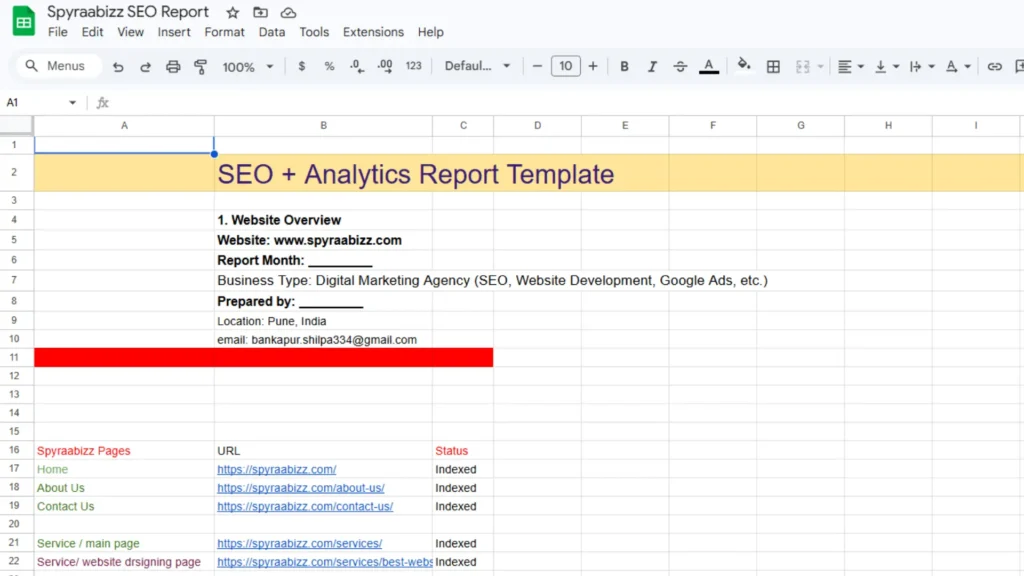
Most agency reports are designed to look impressive, not to give you useful information. A 20-page PDF with graphs and percentages that doesn’t answer ‘did we get more customers this month?’ is not good reporting.
A good report answers four questions clearly. Did organic traffic go up or down compared to last month and last year? How many leads or enquiries came from digital channels? Which specific activities drove those results? And what are we doing differently next month based on this data?
At SpyraaBizz, our monthly reports for every client include Google Search Console data showing exactly which keywords sent traffic, Google Business Profile insights showing calls and direction requests, and a plain-language summary of what changed and why. If a campaign isn’t working, that shows up in the report too, with an explanation of what we’re changing.
Ask any digital marketing company you’re considering to show you a real report from a current client. If they can’t or won’t, that tells you something.
Step 9: Contracts and Commitments
Keep this simple. Before signing anything, understand three things.
First, the notice period. How much notice do you have to give to stop working together? 30 days is standard. 90 days or more is a red flag for a new relationship.
Second, who owns the assets. If you stop working with the agency, do you keep your website? Your Google Ads account? Your content? Your data? You should own all of these. Some agencies create accounts in their own name specifically to make switching difficult.
Third, what the contract says about results. If they promise specific outcomes in the contract, great. Most don’t. If there are no outcome commitments at all, the contract is entirely protecting the agency. That’s worth knowing going in.
A confident agency trusts their work enough to operate on short notice periods. The best relationships in digital marketing are month-to-month, and they last for years because the work produces results.
Digital Marketing is Not a One-Time Purchase
The businesses that get the best results from digital marketing treat it like hiring a team member, not buying a product. They give the agency time to learn their business. They respond quickly when the agency needs input. They’re honest when something isn’t working instead of waiting until they’re frustrated. And they think in quarters, not weeks.
SEO takes 3 to 6 months to show meaningful results. Google Business Profile optimization often works faster, 4 to 8 weeks for local searches. Paid ads can generate leads in days, but converting those leads still depends on your sales process, your website, and your response time.
The right agency will tell you this upfront. They’ll set expectations that are honest rather than impressive. And they’ll show you evidence that the work is building toward the result you need, even before that result is fully visible in the numbers.
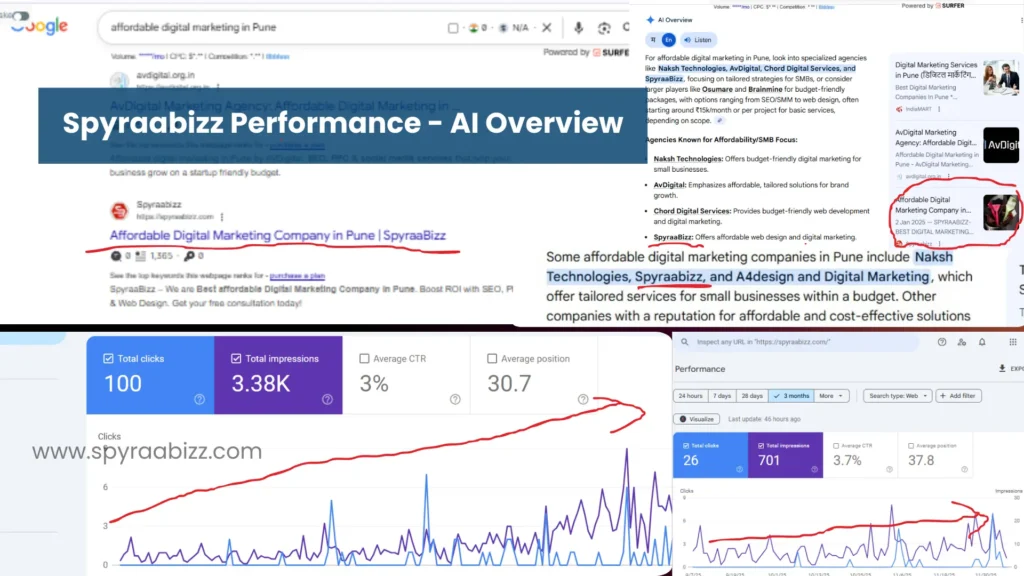
Before hiring, check Case studies (with real data), Website performance, Content quality, Online presence, Client industries they’ve worked with, If they can’t show real-world results, that’s a warning sign.
Good agencies provide
- Simple, easy-to-understand reports
- Clear KPIs (traffic, leads, conversions)
- Regular updates (weekly/monthly)
They explain what’s working, what’s not, and what’s next. At SpyraaBizz, we believe in complete transparency. That’s why we keep our clients updated with regular weekly or bi-weekly reports, so you always know the progress of your project and what’s happening behind the scenes.
Final Thoughts
Choosing the right digital marketing agency for business is about alignment, not hype.
Before you decide:
- Know your goals
- Know your budget
- Know your expectations
- Choose partners, not promises
When done right, digital marketing becomes an asset, not an expense.
Frequently Asked Questions
The best signal is how they approach the first conversation. A good agency asks about your goals, your customer, your budget, and what you’ve tried before. They listen more than they pitch. If the first call is mostly about their capabilities and services with minimal questions about your business, that’s a sign the campaign will be run the same way.
Check four things: ask for case studies with real numbers from businesses in your industry. Ask who will actually work on your account and whether any of it is outsourced. Ask what the notice period is to stop the engagement. And ask to see a sample monthly report so you know what you’ll actually receive.
A realistic starting budget for meaningful results in a city like Pune is Rs 15,000 to Rs 30,000 per month for a single focused service, either SEO or Google Ads, not both at once. Google Business Profile optimization can often be handled for less and produces fast results for local businesses. Spreading a small budget across 4 or 5 services produces mediocre results in all of them.
Guaranteed rankings, long-term contracts before any results, reports that show only vanity metrics like followers and impressions rather than leads and conversions, and agencies that can’t explain their strategy in plain language. Also: agencies that don’t ask about your customer, your sales process, or what you’ve already tried.
SEO: 3 to 6 months for meaningful organic ranking movement. Google Business Profile: 4 to 8 weeks for local search visibility improvements. Google Ads: leads can start within days, but 4 to 6 weeks of data is needed before you can judge whether the campaign is working at a cost that makes business sense. Be skeptical of any agency that promises faster results than these ranges.
For most businesses, it doesn’t matter whether the agency is local or remote, what matters is whether they have experience with your type of business. That said, a local agency in your city often has useful context about your market, your competitors, and what works for local search visibility. At SpyraaBizz, we work with Pune-based businesses in person and with businesses across India fully remotely.
Not sure which agency is right for your business?
Book a Free Consultation