

Quick answer: SEO for small businesses means optimising your Google Business Profile, service pages, and local citations so you show up when nearby customers search for what you do. In 2027, ranking also requires AI search optimisation (AEO/GEO) so tools like Google AI Overviews and ChatGPT can find and recommend your business. The fastest wins come from local SEO and service page structure, not blogging alone.
What this guide covers: keyword research, service page structure, local SEO, blog content, technical fixes, backlinks, and AI search optimization, in that order. No theory. Just what actually moves rankings for small businesses. You have a good service. Customers who’ve worked with you are happy. But when someone in Pune searches for what you do, your competitor shows up first.
That’s an SEO problem. And it’s fixable.
SEO isn’t complicated once you understand what Google is actually looking for. This guide breaks it down into 9 practical steps, the same steps we use seo for small businesses in Pune across healthcare, coaching, home services, and retail.
What is SEO for small businesses?

Why SEO Matters More Than Most Small Businesses Realize
Before a customer contacts your business, they usually go through the same process. They search on Google, compare 3 or 4 options, check reviews, visit a website or two, and then decide who to call.
If your business doesn’t appear in that search, you’re not even in the running. The customer doesn’t know you exist. That’s the real cost of not doing SEO. It’s not that your competitors are better, it’s that they’re more visible.
A few numbers worth knowing:
- 68% of online experiences start with a search engine
- 75% of users never scroll past the first page of results
- 46% of all Google searches have local intent, someone looking for something nearby
Unlike paid ads, SEO keeps working after you stop spending. A page that ranks well today can bring in traffic for years. That’s the compounding effect that makes SEO worth the upfront investment.
Some useful SEO stats that actually matter
– 68% of online experiences begin with a search engine
– 75% of users never scroll past page 1
– 46% of Google searches have local intent
This shows how important it is for your business to appear in search results.
How Google Decides Who Ranks
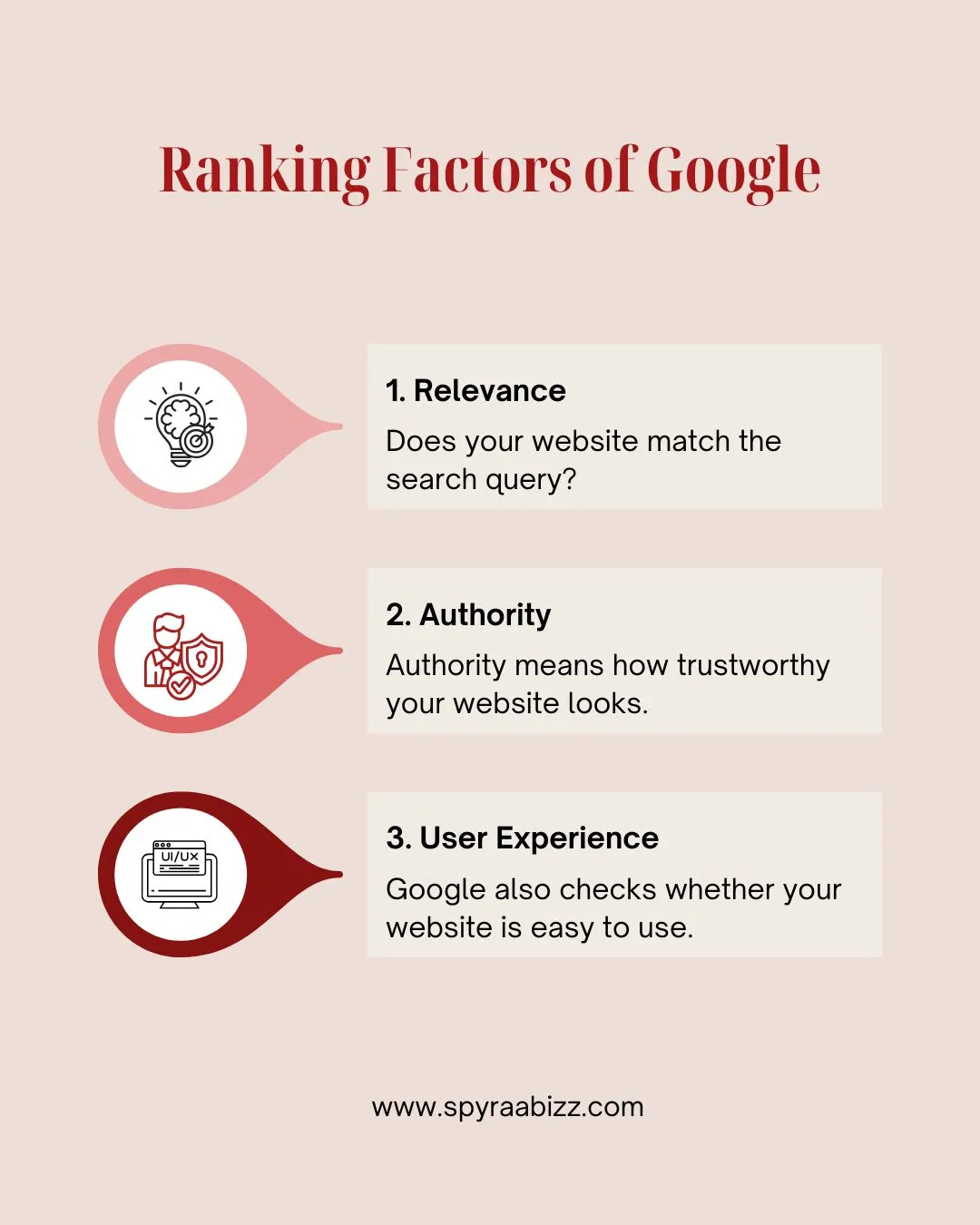
Google uses hundreds of signals, but most of them fall into three buckets. Understanding these helps you prioritize where to spend your time.
Relevance
Does your page actually answer what the user searched for? A page about ‘SEO services’ that never mentions Pune won’t rank for ‘SEO company in Pune.’ Google matches content to query. The more specifically your content addresses a search term, the better your chances.
Authority
How trustworthy does your website look to Google? Authority comes from backlinks (other websites linking to yours), consistent publishing, and brand mentions across the web. A site that’s been active and building links for 2 years will almost always outrank a brand new site on the same topic.
User experience
Does your site work well? Google tracks signals like how quickly people leave your page, whether your site loads fast on mobile, and whether the navigation is clear. If visitors arrive and immediately go back to Google, that’s a negative signal. Fast, mobile-friendly, easy-to-navigate pages rank better.
Step 1: Find Out What Your Customers Are Actually Searching
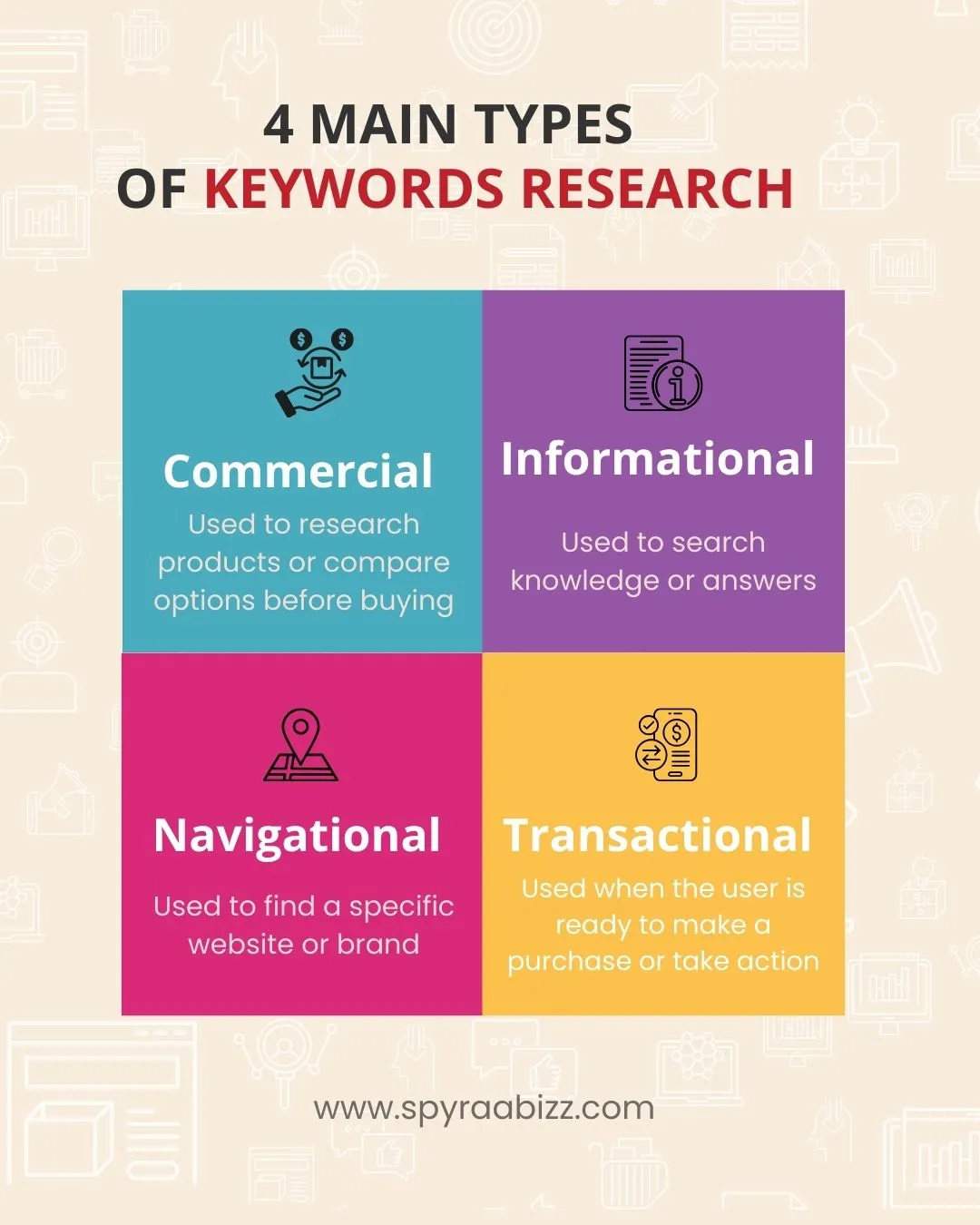
This is where most small businesses get SEO wrong from the start. They target broad terms like ‘digital marketing’ or ‘doctor’ instead of the specific phrases their actual customers type. Keyword research is simply the process of finding out what your customers search when they need what you offer.
How to do basic keyword research
You don’t need expensive tools to start. Try this:
- Type your service into Google and look at the autocomplete suggestions, those are real searches
- Scroll to the bottom of search results and check ‘People also search for’
- Use Google Search Console (free) to see what queries your site is already getting impressions for
- Use tools like Ahrefs, Ubersuggest, or Google Keyword Planner for volume data once you have a list
How keyword targeting actually works
Here’s a real example. If you’re a dermatologist in Pune, your keyword strategy might look like this:
Type | Example | Why it matters |
Primary keyword | best dermatologist in Pune | High volume, high competition, worth targeting on your main page |
Secondary keywords | cosmetic dermatologist Pune, pediatric dermatologist Pune | Easier to rank, still valuable, one page each |
Long-tail keywords | laser hair removal for sensitive skin in Pune | Lower volume but very high intent, person is ready to book |
Most small businesses underuse long-tail keywords. They’re easier to rank for and often bring in customers who are much closer to deciding.
Step 2: Create a Separate Page for Every Service
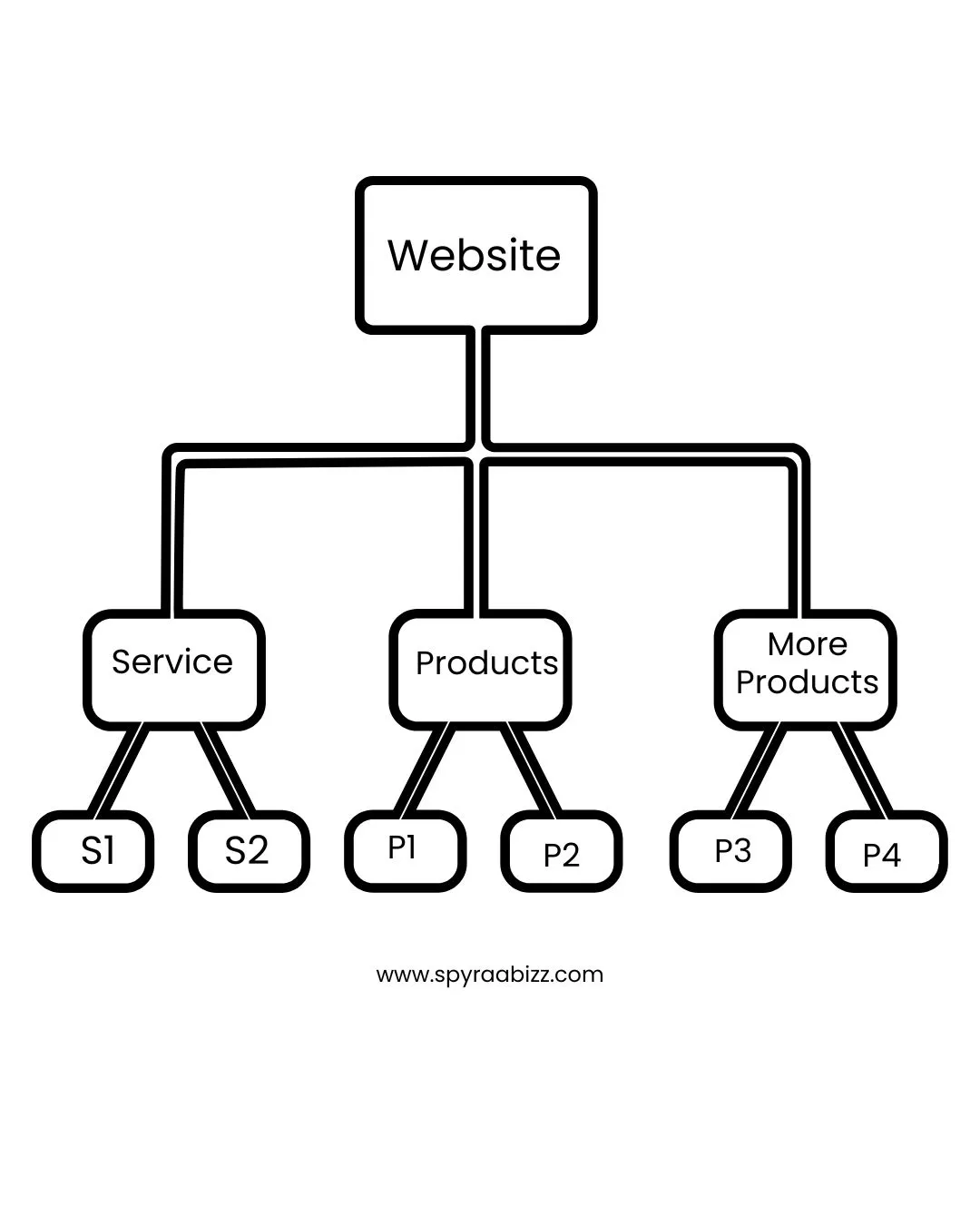
This is the single most common mistake we see. A business builds a website with one page called ‘Services’ and lists everything on it. That page can’t rank for anything specific.
Google ranks individual pages, not websites. If you want to show up for ‘website designer in Pune,’ you need a page that’s specifically about root canals. Not a page that mentions it in a list of 12 other services.
What your site structure should look like
Think of your website like folders. Each service gets its own dedicated space:
- spyraabizz.com/services/seo-services-pune/
- spyraabizz.com/services/website-design-pune/
- spyraabizz.com/services/social-media-management-pune/
What every service page needs
A well-structured service page has these elements in order:
- H1 heading with the target keyword (example: SEO Services in Pune)
- A clear explanation of the service in plain language
- Why your business specifically is the right choice
- A step-by-step breakdown of how you work
- Real results or a case study if you have one
- An FAQ section covering common questions
- A clear contact or inquiry CTA
Each of these elements serves both the user and the search engine. Users get the information they need to make a decision. Google gets a clear, well-structured page it can confidently rank.
Step 3: Fix On-Page SEO on Every Page
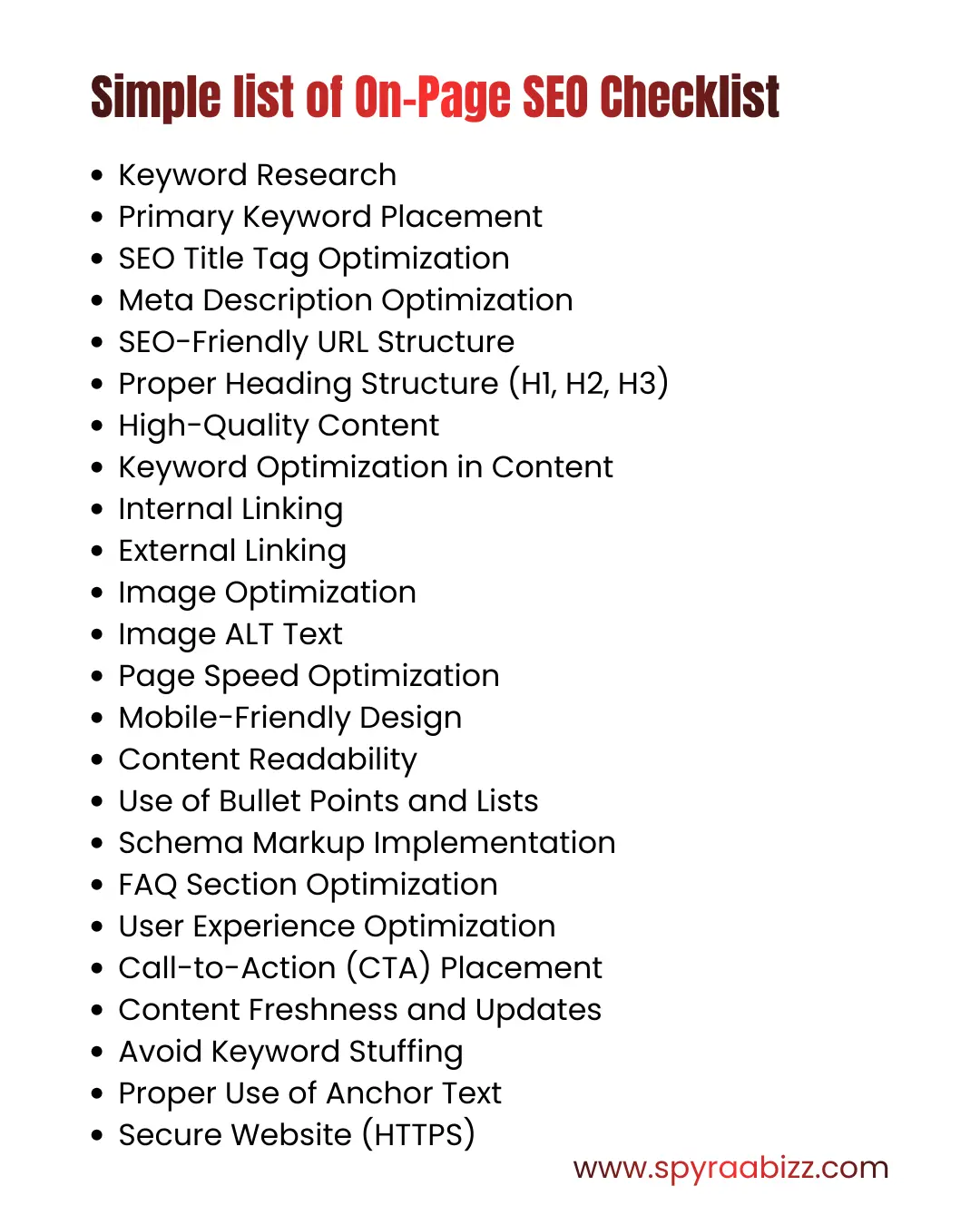
On-page SEO is the set of signals you control directly on your website. Getting these right is the foundation. Without them, even great content won’t rank as well as it should.
Title tag
The title tag appears as the clickable headline in Google search results. Keep it under 60 characters. Put your target keyword near the front. Make it specific — ‘SEO Services in Pune for Small Businesses’ is better than ‘Our Services.’
Meta description
This short text appears below the title in search results. It doesn’t directly affect ranking, but it affects whether someone clicks your result. Make it specific, include a benefit, and keep it under 155 characters.
Heading structure
Use one H1 per page with your main keyword. Use H2 headings to break the page into sections. Use H3 for sub-points within sections. This structure helps Google understand what the page covers and helps readers scan quickly.
Internal links
Link related pages together within your own site. If you’re writing a blog post about local SEO tips, link to your local SEO Pune services page. If your services page mentions AI SEO, link to your AI Seo for small business page. Internal links distribute authority across your site and help Google understand your site structure.
Image alt text
Every image on your site should have an alt text description. This helps Google understand what the image shows and contributes to accessibility. Keep it descriptive and natural, ‘dentist performing root canal procedure’ is better than ‘image1.jpg
Step 4: Set Up and Optimize Your Google Business Profile
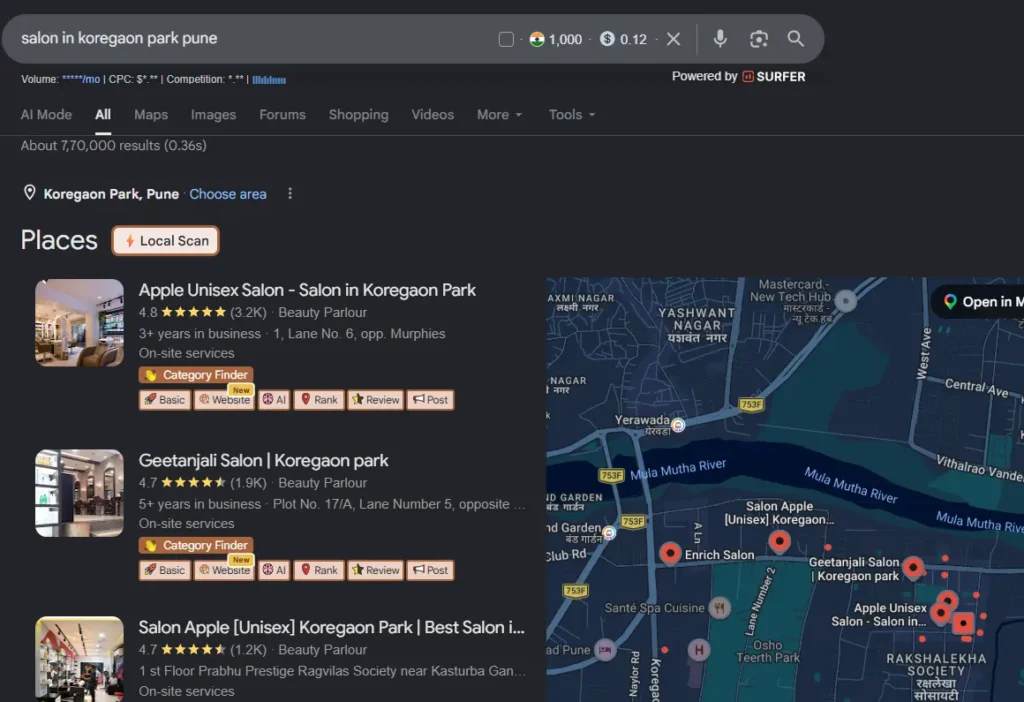
For local businesses, Google Business Profile (GBP) is often the fastest path to visibility. It’s what puts you in the map section, that block of 3 businesses with a map that appears at the top of local searches.
Someone searching ‘Google Business Profile Experts in Pune‘ or ‘salon in Koregaon Park Pune’ sees that map section first. Organic website results come below it.
The most important GBP settings
- Primary category: be as specific as possible. ‘Cosmetic Dentist’ ranks better than ‘Dentist’ if that’s your focus
- Business name, address, and phone: must be consistent with what’s on your website and all other directories
- Services: list every individual service, not just a general description
- Photos: upload at least 10, exterior, interior, team, and work photos
- Reviews: set up a follow-up process to ask every satisfied client
- Google Posts: post at least once a week to signal an active profile
A complete, active GBP profile can appear in the local 3-Pack within 2 to 4 weeks. That’s significantly faster than website SEO, which typically takes 3 to 6 months.
Step 5: Fix the Technical Issues That Hold Rankings Back

Technical SEO isn’t glamorous, but broken technical foundations cancel out everything else. You can write excellent content and still rank poorly if your site has basic technical problems.
Site speed
Test your site on Google PageSpeed Insights (free tool). A slow site loses visitors before they read anything, and Google uses page speed as a ranking signal. Common fixes include compressing images, reducing unnecessary plugins, using faster hosting, and enabling browser caching. Even a 2-second improvement in load time can meaningfully reduce bounce rates.
Mobile performance
Over 70% of searches in India happen on mobile. Google uses mobile-first indexing, which means it evaluates your mobile version of a page, not your desktop version, when deciding where to rank it. Your site needs to load quickly, display correctly, and have tap-friendly buttons on a small screen.
Clean URL structure
Keep your URLs short and descriptive. ‘spyraabizz.com/seo-services-pune/‘ is better than ‘yoursite.com/page?id=47.’ Clean URLs are easier for Google to understand and easier for users to remember and share.
Sitemap and Search Console
Submit your sitemap to Google Search Console. This tells Google which pages exist on your site and helps it crawl them faster. It also gives you data on which queries are triggering impressions and clicks — which feeds directly into your keyword strategy.
Fix broken links
Broken internal links (pages that return a 404 error) waste crawl budget and create a poor user experience. Use a tool like Screaming Frog or Google Search Console to find and fix them.
Step 6: Publish Blog Content That Actually Helps People
Service pages get you found when someone already knows what they want. Blog content gets you found when someone is still figuring out what they need, and that’s a much larger pool of potential customers.
A dental clinic that publishes ‘what to expect during a root canal’ or ‘how to choose the right dentist in Pune’ attracts people who are researching before they’re ready to book. Each blog post is another page Google can rank and another way someone discovers your business.
What topics to write about
The easiest place to start is the questions you already get asked. Think about:
- What do customers ask before they contact you?
- What concerns do people have about your service?
- What do people search before choosing a business like yours?
- What misconceptions exist about your industry?
For a digital marketing agency in Pune, that might look like: ‘how long does SEO take to show results,’ ‘GMB vs website SEO,’ ‘how to choose the right digital marketing agency,’ or ‘what does a social media manager actually do.’
How to structure a blog post for SEO
- Start with a specific H1 that includes the target keyword
- Use H2 headings to break the post into clear sections
- Keep paragraphs short — 2 to 4 lines maximum
- Add a FAQ section at the end targeting related questions
- Link back to relevant service pages within the body
- Aim for at least 1200 words on competitive topics
Over time, a consistent blog builds topical authority, Google starts to see your site as a reliable source on your subject area, which lifts rankings across all your pages, not just the blogs
Step 7: Build Backlinks from Local and Relevant Sources
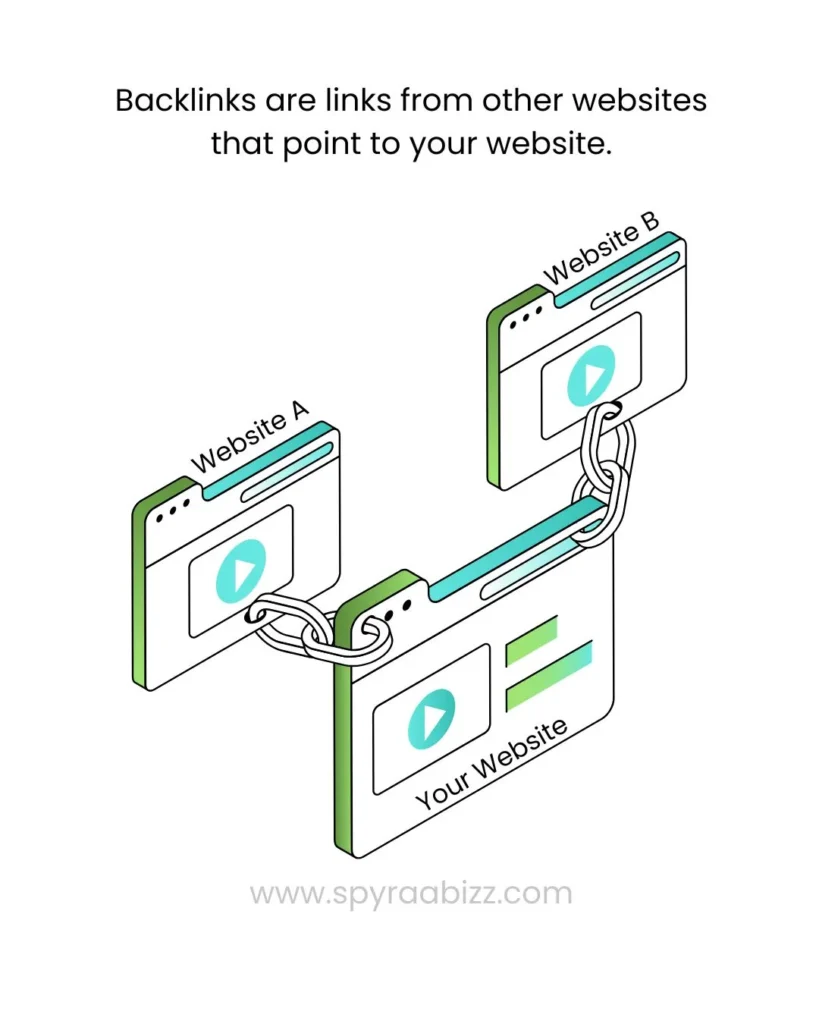
Backlinks are links from other websites pointing to yours. Google treats them like votes of confidence, the more quality backlinks you have, the more authoritative your site looks.
For small businesses, you don’t need hundreds of backlinks. A handful of strong, relevant ones can make a real difference, especially in local search.
Where to get backlinks as a small business in Pune
- Business directories: Justdial, Sulekha, IndiaMART, IndiaBizz, get listed on all of them with consistent NAP (name, address, phone)
- Industry directories: find directories specific to your category, dental directories, legal directories, marketing agency lists
- Local news and community sites: if there’s a story angle related to your business or community involvement, reach out
- Partner websites: suppliers, associations, or complementary businesses you work with, ask for a mention or link
- Guest blogging: write a useful post for a relevant blog in your industry and get a link back to your site
Quality matters more than quantity here. A link from Justdial or a local Pune news site is worth more than 50 links from random low-quality directories.
Step 8: Optimize for AI Search (Google AI Overviews, ChatGPT, Perplexity)
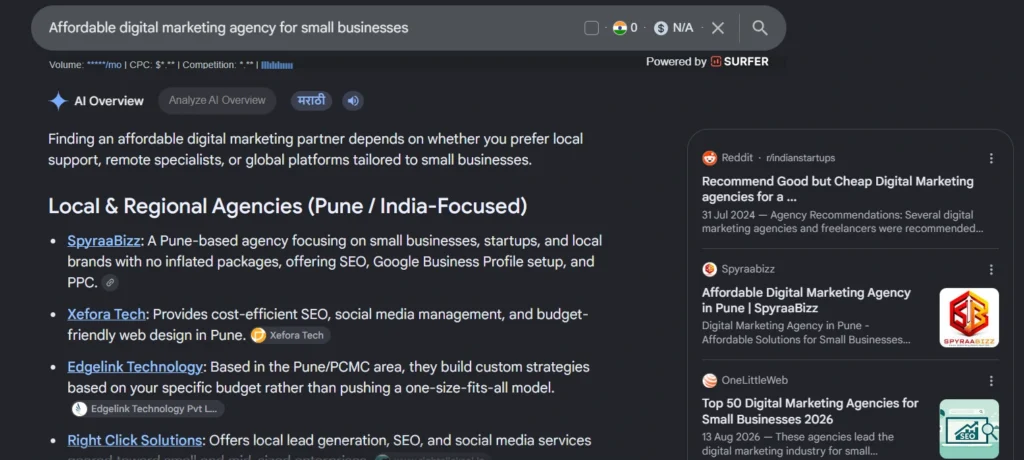
Search is changing. Google AI Overviews now appear at the top of many search results, pulling answers directly from web pages before showing any organic links. ChatGPT and Perplexity are increasingly used for business recommendations.
If your content isn’t structured to be picked up by these systems, you’re missing a growing share of search traffic.
What AI search systems look for
- Clear definitions: pages that define terms plainly tend to get cited
- Direct answers: if someone asks a question, your page should answer it in the first sentence of the section, not bury the answer 3 paragraphs in
- Structured headings: H2 and H3 headings help AI systems understand your content’s structure
- FAQ sections: direct question-and-answer format is exactly what AI Overviews pull from
- Tables and comparisons: structured data is easy for AI systems to read and cite
- Factual, specific content: AI systems prefer pages that make verifiable claims with numbers and real examples over vague generalizations
The good news is that most of what AI search systems want is the same as what makes a page useful for human readers. Good content structure, clear answers, and specific examples help both.
Step 9: Track Results Monthly and Adjust
SEO without tracking is guesswork. You need data to know what’s working, what isn’t, and where to focus next.
Google Search Console (free)
This shows you which search queries are bringing impressions and clicks to your site, which pages are ranking, and what your average position is for different keywords. Check it monthly. If a page is getting impressions but few clicks, the title tag or meta description might need work. If a page has good clicks but poor rankings, the content might need more depth.
Google Analytics 4 (free)
This shows you what happens after someone lands on your site. Which pages get the most traffic, how long people stay, and whether they contact you. Connect it to your contact form to track conversions — not just traffic.
What to review monthly
- Top 10 queries in Search Console, are they the ones you’re targeting?
- Impressions and clicks trend, going up or down over the last 3 months?
- Which pages are ranking and which aren’t getting any impressions
- Conversion rate, are visitors actually contacting you.
Adjust based on what you see. Pages that are getting impressions but no clicks need better titles and meta descriptions. Pages with no impressions at all might need more content, better keyword targeting, or backlinks. SEO is iterative; you keep improving what you’ve built.
Common Mistakes That Small Businesses Make with SEO
Targeting keywords that are too competitive
‘Digital marketing’ is searched by millions of people globally and dominated by massive sites. ‘Digital marketing agency in Pune for small businesses‘ has real local intent and far less competition. Start specific. You can always expand later.
Putting all services on one page
A single Services page is one of the most common website mistakes. Each service needs its own page with its own keyword focus. There’s no shortcut around this.
Ignoring local SEO signals
If you serve customers in Pune, your pages should mention Pune naturally. Your GBP should be set up and active. Your business should be listed in local directories with consistent information. Missing any of these hurts local rankings.
Expecting results in 4 weeks
SEO takes time. For most small businesses, 3 to 4 months is when you start seeing meaningful movement. 6 months is when results become consistent. Anyone promising page 1 rankings in 30 days is not being honest with you.
Publishing content and forgetting about it
A blog post published once is not a strategy. Updating old content, improving pages that are close to ranking, and consistently publishing new pieces is what builds long-term organic traffic. Think of it like fitness, one good workout doesn’t change much, but 6 months of consistency does.
How Much Does SEO Cost for Small Businesses in India?
Pricing varies based on competition, number of pages being worked on, and what’s included. Here’s a realistic breakdown for 2026:
Tier | Monthly Range | What’s typically included |
Basic | Rs 5,000 to 10,000 | GMB optimization, on-page fixes on 5 to 8 pages, 1 to 2 blog posts |
Standard | Rs 15,000 to 30,000 | Full on-page SEO, 4 to 6 blogs, technical audit, local citations, monthly reporting |
Advanced | Rs 30,000 to 50,000+ | Full SEO campaign, content strategy, backlink building, AI SEO optimization, conversion tracking |
One thing worth knowing: the cheapest SEO packages often deliver the slowest results because they can only do a limited amount of work each month. The question isn’t just what you pay, it’s whether the work being done is moving your rankings.
SEO compounds over time. Businesses that invest consistently for 12 months almost always outperform those who run campaigns in bursts.
Final Thoughts
SEO isn’t a magic switch. It’s more like building a reputation, slow at the start, but increasingly difficult for competitors to undo once it’s established.
The businesses we’ve seen grow the most through SEO in Pune are the ones that started with the basics, stayed consistent, and improved over time. They didn’t chase shortcuts. They built real pages, wrote genuinely useful content, and fixed what wasn’t working based on data.
Start with what you can control today. Set up your Google Business Profile properly. Create a dedicated page for each service. Write one helpful blog post this month. Fix your site speed. That’s enough to start moving. The rest follows.
F.A.Q.
Yes, and it’s often the most cost-effective long-term marketing channel available. Unlike ads, SEO keeps delivering traffic after you stop spending. The catch is patience, results typically take 3 to 6 months to show meaningfully. Businesses that start early and stay consistent get the biggest returns.
Basic SEO packages in Pune typically start at Rs 5,000 to 10,000 per month and cover on-page optimization and GMB management. Standard packages run Rs 15,000 to 30,000 and include content creation, technical SEO, and reporting. Advanced campaigns with backlink building and AI SEO run Rs 30,000 to 50,000 or more depending on the competition in your category.
You can handle the basics yourself, setting up your Google Business Profile, publishing blog content, and fixing obvious on-page issues. But technical SEO, backlink building, and keyword strategy tend to produce faster results when handled by someone who works on SEO full time. Most small businesses see better ROI from hiring help than spending the same hours trying to learn it themselves.
Structure your content to answer questions directly. Use clear H2 and H3 headings. Add FAQ sections to your service pages and blog posts. Make factual claims with specific numbers. AI Overviews tend to pull from pages that answer a question clearly in the first few sentences of a section, not from pages that bury the answer in long paragraphs.
Local SEO is the practice of optimizing your online presence for location-based searches, things like ‘dentist in Kothrud’ or ‘salon near Hadapsar.’ For businesses in Pune that rely on nearby customers, local SEO is often more valuable than broader SEO because the competition is more manageable and the traffic is more likely to convert. It includes optimizing your Google Business Profile, getting listed in local directories, and adding location context to your website pages.
Ready to actually rank?
Book a free 15-minute SEO audit, we’ll show you exactly where you’re losing visibility and what to fix first.